

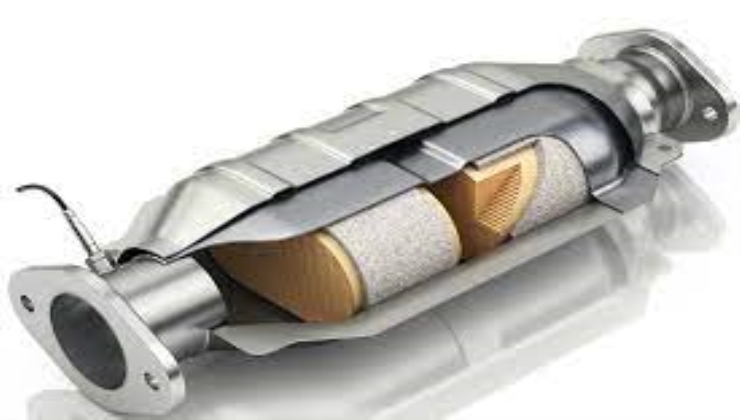
Catalytic converters stand as a vital element within the contemporary automotive exhaust system. This innovative device facilitates a chemical reaction between toxic exhaust elements and precious metals arranged on the catalytic converter’s “honeycomb” structure. This transformative process culminates in the generation of benign emissions released into the atmosphere.
If you are looking for a buyer and want to sell your old catalytic converter at a bargain price, use the website https://autocatalystmarket.com/us/en/products/mitsubishi. Here you can also buy used converters. The platform is easy to navigate and will not be difficult to find.

What is inside the catalytic converter?
Structurally, the catalytic converter is a steel alloy housing with inlet and outlet ports. Inside the housing are fixed:
- catalytically active cellular block – the main working part;
- a sensor for fixing the level of exhaust pollution reached after passing the central working unit;
- protective casing – heat-resistant gasket, which thermally insulates and protects the contents of the catalytic converter from shaking, friction and shocks.
The active components, due to which the exhaust is cleaned, begin to function when the engine is running.
The most valuable part
Potential buyers of auto emissions converter exhibit a keen interest in the composition of the core, often referred to as the “carrier.” This integral component takes the form of a cellular insert, crafted from either ceramic or metal, bearing a striking resemblance to a honeycomb structure found in beehives. The cell walls are meticulously coated with a delicate layer of active sputtering, incorporating rare and valuable metals from the platinum group. It is this high-value composition of the sputtering that elevates the catalytic converter to the status of a coveted secondary raw material in the automotive realm.
The percentage of chemical elements in the alloy varies depending on the origin of the catalyst:
- Rhodium and palladium predominate in the sputtering of catalytic converters removed from autos with gasoline engine types.
- Platinum is usually more in autocatalysts removed from powerful diesel engines of foreign cars.
The cost of the above precious metals in the aggregate is dozens of times higher than the cost of gold. Of course, the best solution for car owners would be independent extraction, but unfortunately, it is impossible without the appropriate technological equipment. And this task is far from being the easiest.
The cost of the converter
As a rule, the cost of failed auto emissions converter is determined by such factors:
- the volume of car engines: the more powerful the motor, the more precious metals are contained in the installed catalysts;
- the current state of the “stuffing” of the neutralizer: the more intact and cleaner the internal honeycomb, the higher the probability that valuable metals are preserved in it;
- other points: country of production (imported catalysts use more precious metals), quality of particulate filters (clogging of honeycomb structure depends on it), presence or absence of foil.
It is recommended to surrender an automobile auto emissions converter in the best possible condition, without trying to break the internal “stuffing”.
